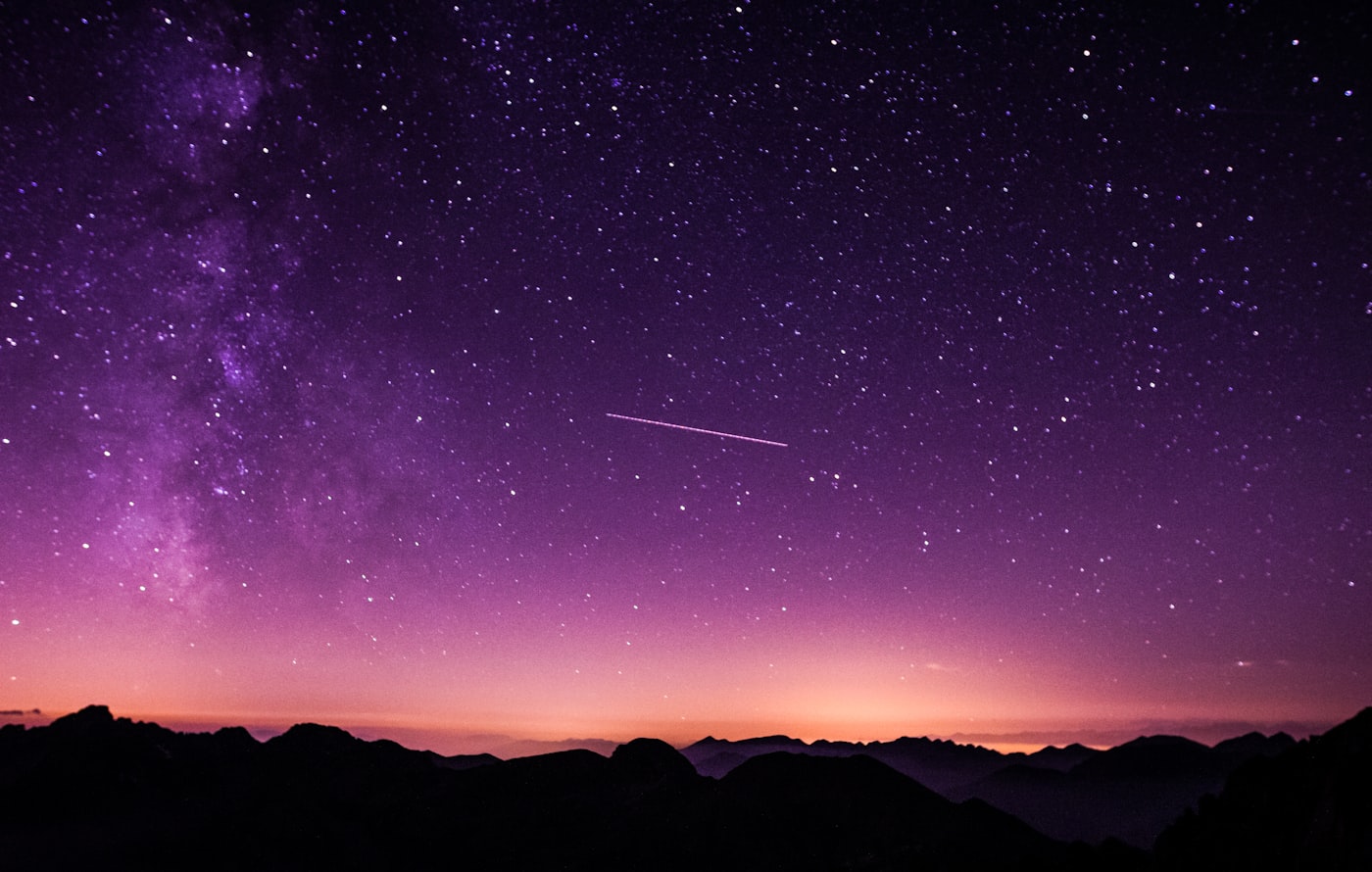
"I'd love an observatory, but I live in the suburbs." We hear this on almost every consultation call. It's a fair concern, and the honest answer surprises most people: light pollution matters, but it matters far less than how often you actually get out under the sky. A backyard observatory in a suburban yard will usually outperform a portable setup you only haul to a dark site a few times a year.
What the Bortle Scale Tells You
Astronomers rate sky darkness on the Bortle scale, from Class 1 (pristine, remote desert skies) to Class 9 (inner city). Most American suburbs fall somewhere between Class 5 and Class 7. Rural areas outside small towns typically sit at Class 3 or 4.
You can look up your own location for free on a light pollution map such as lightpollutionmap.info. Type in your address and you'll see roughly where your backyard falls. Don't be discouraged by an orange or red dot. Here's why.
What You Can Do From a Suburban Backyard
Planets, the Moon, and double stars: basically unaffected
Bright targets cut right through light pollution. Jupiter's cloud bands, Saturn's rings, Mars at opposition, lunar craters, and colorful double stars look just as good from a Class 7 backyard as from a mountaintop. For these targets, what matters is steady air (seeing) and a well-acclimated telescope. A permanent observatory delivers both, because your optics are already at outdoor temperature when you open the roof.
Deep-sky astrophotography: very much possible
This is where modern equipment has changed the game. Narrowband filters (Hydrogen-alpha, Oxygen-III, Sulfur-II) pass only the specific wavelengths emitted by nebulae and block nearly everything streetlights produce. Some of the most impressive nebula images posted online every week are captured from suburban backyards. Dual-band filters for one-shot color cameras do something similar at a lower cost.
The catch is that narrowband imaging needs a lot of total exposure time, often many hours on a single target spread over several nights. That's exactly what a permanent observatory is built for. Your rig stays aligned and connected, so you can add another three hours of data any clear night with almost no setup.
Visual deep-sky observing: harder, but not hopeless
Faint galaxies are the targets most affected by suburban skyglow. Bright galaxies, globular clusters, and open clusters are still rewarding. Larger aperture helps, as do nebula filters for visual use and simply waiting for the later hours of the night, when many outdoor lights shut off and skies darken noticeably.
The Math Most People Miss
Imagine two astronomers. One lives under Class 4 skies but sets up a portable rig, so they observe maybe 15 nights a year. The other lives under Class 6 skies with a permanent observatory and observes 60 or more nights a year, often for just an hour after dinner.
The second astronomer almost always sees more, captures more data, and gets better at the hobby faster. Clear nights are the scarcest resource in amateur astronomy, especially in the eastern half of the country. Removing the setup barrier means you use far more of them.
How an Observatory Actually Helps With Light Pollution
A roll-off roof observatory is also a practical light shield. The walls block glare from neighbor porch lights, streetlights, and car headlights at ground level. When you're standing at the eyepiece, your eyes stay dark adapted. When you're imaging, stray light hitting the side of the tube is reduced. Many owners notice this difference within their first week.
Placement helps too. Positioning the observatory so the walls face your worst light sources, and keeping it away from your own house lights, makes a measurable difference. Our site preparation guide covers placement in detail.
Simple Ways to Darken Your Own Sky
- Control your own lights. Switch exterior lights near the observatory to warm, downward-facing fixtures, or put them on a switch you control.
- Talk to neighbors. A friendly conversation about an all-night floodlight often goes better than you'd expect. Some astronomers even buy a neighbor a shielded fixture.
- Use red light inside. Keep the observatory interior on dim red lighting so your eyes stay adapted.
- Observe later. Skies often darken noticeably after midnight as businesses and homes turn lights off.
- Pick targets high in the sky. Skyglow is worst near the horizon. Objects near the zenith pass through less polluted air.
When to Choose a Different Location
If you own a second property, a cabin, or land in a darker area, that may be the better home for a stargazing shed, especially if visual galaxy hunting is your main interest. Many customers ask us about exactly this. Because every SkyShed is delivered fully assembled, a rural property just needs a concrete pad and power, and you can control the setup remotely if internet is available. But for most people, the backyard you already have is the right answer, because it's the one you'll actually use.
The Bottom Line
Suburban skies are not a dealbreaker for a backyard observatory. Planetary and lunar observing are essentially unaffected, narrowband astrophotography thrives from the suburbs, and the sheer number of extra nights a permanent setup gives you outweighs a darker sky you rarely visit. If you're wondering how your specific location will perform, bring your address to a call with us and we'll talk it through.
Wondering How Your Backyard Will Perform?
Book a free 30-minute call. We'll look at your location, your equipment, and your goals, and help you plan an observatory that fits.